West Bengal Assembly Elections to Be Held in Two Phases, Election Commission Promises Violence-Free Polls
IIE DIGITAL DESK : Kolkata: The Election Commission of India has announced that the upcoming assembly elections in West Bengal will be conducted in two phases, marking a significant change in the polling pattern after nearly twenty-five years. The decision has drawn widespread attention across the political spectrum, particularly in a state where elections have often been conducted in multiple phases over the past two decades due to security concerns.
According to the schedule declared by the Commission, voting in the state will take place on April 23 and April 29. In the first phase, polling will be held in 152 assembly constituencies, while the remaining 142 constituencies will vote in the second phase. The results of the elections in West Bengal, along with those in several other states and a union territory, will be announced on May 4.
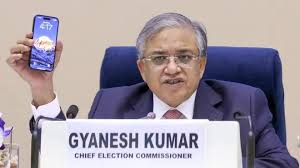
The announcement was made during a press conference in New Delhi by a full bench of the Election Commission led by Chief Election Commissioner Gyanesh Kumar. While the Commission released the election schedule for five regions—Assam, Kerala, Tamil Nadu, Puducherry and West Bengal—much of the focus during the briefing remained on West Bengal due to its history of intense political competition and recurring concerns over election-related violence.
West Bengal’s two-phase polling plan, the other four states and the union territory will conduct their elections in a single phase. The decision to reduce the number of phases in West Bengal has attracted particular attention because previous elections in the state had been conducted in as many as six to eight phases. Even during the COVID-19 pandemic in 2021, the assembly election was conducted in eight stages to ensure adequate deployment of security forces.
The last time West Bengal voted in only two phases was in 1977, a landmark election in which the Left Front defeated the Congress government led by Siddhartha Shankar Ray and came to power in the state. Since then, elections in the state have gradually expanded into multi-phase exercises due to security considerations and demands from opposition parties for stronger deployment of central forces.
Explaining the Commission’s decision, Chief Election Commissioner Gyanesh Kumar said extensive consultations had been held with all stakeholders before finalizing the schedule. He noted that the Commission believed the number of polling phases should be reduced to a level that is convenient and manageable for all parties involved while still ensuring a secure and orderly election process.
The Commission recently visited West Bengal and held separate meetings with major political parties in the state. During those discussions, opposition parties including the Bharatiya Janata Party, the Communist Party of India (Marxist) and the Indian National Congress reportedly demanded that the election be conducted in one or two phases with adequate security arrangements to ensure a free and fair contest. The Commission’s final decision is widely seen as reflecting those demands.
Addressing concerns about law and order, the Chief Election Commissioner emphasized that the Commission’s primary objective is to ensure a violence-free and intimidation-free election. He stated that strict action would be taken against any attempt to disrupt the electoral process or influence voters through unlawful means. The Commission also warned that spreading misinformation or deepfake videos during the election campaign would invite severe penalties, with designated nodal officers monitoring such activities closely.
The announcement of the election schedule has automatically brought the Model Code of Conduct into effect across the state. The Commission made it clear that any violation of electoral rules or attempts to manipulate voters would be dealt with firmly under the law. Officials also indicated that lists are being prepared of police officers against whom complaints have been made, and appropriate decisions regarding their deployment will be taken in accordance with the rules.
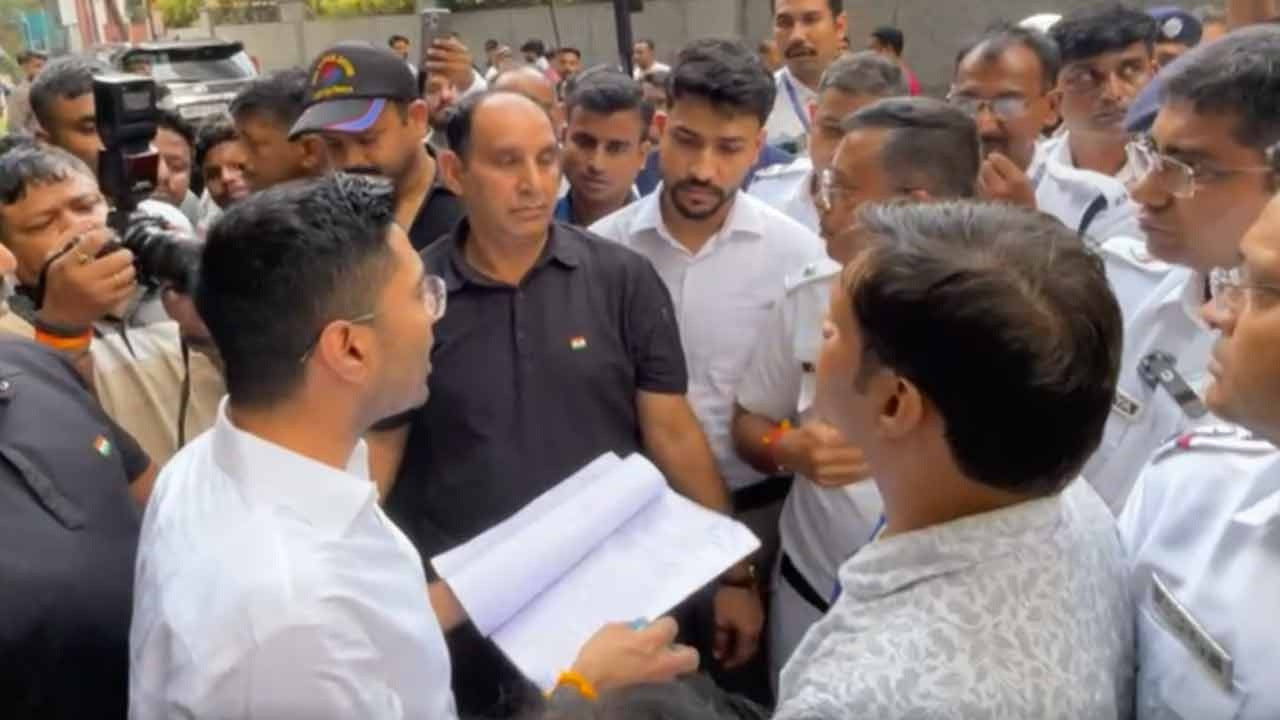
The announcement comes against the backdrop of recent political tensions in Kolkata during the visit of Prime Minister Narendra Modi, when clashes were reported in the Girish Park area between supporters of rival political parties. The incident also reportedly involved vandalism at the residence of state industry minister Shashi Panja. The Election Commission has already sought a report from the city police commissioner regarding the episode and questioned why central forces were not deployed during the incident.
Chief Election Commissioner Gyanesh Kumar said that while governments may take policy decisions before the Model Code of Conduct comes into force, all administrative actions will now be monitored strictly under election rules. He reiterated that ensuring a peaceful and impartial electoral process is the Commission’s foremost responsibility.
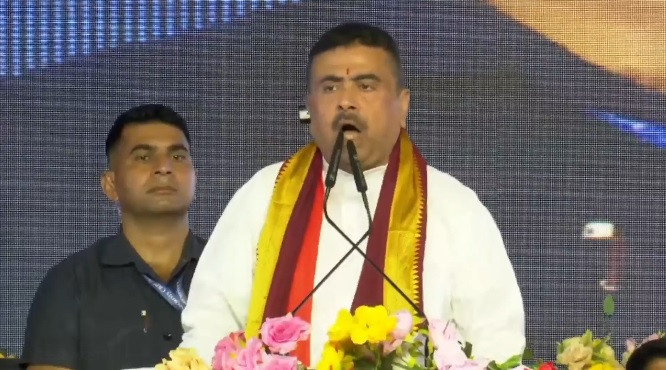
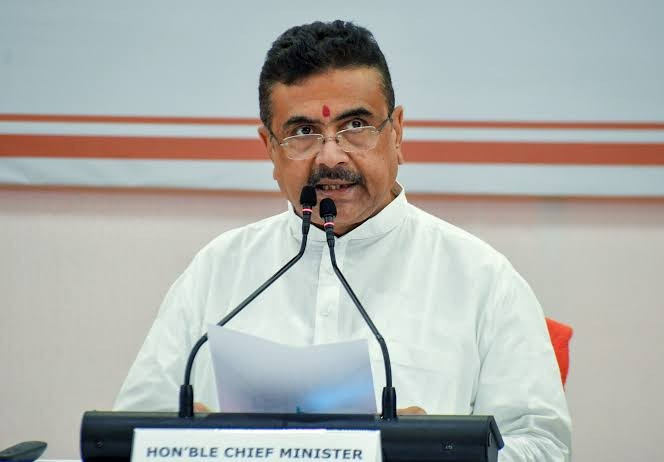
Political reactions to the announcement were swift. Leader of the Opposition in the West Bengal Assembly Suvendu Adhikari welcomed the decision, expressing confidence that even a two-phase election could be conducted peacefully if the Commission took firm measures. State BJP president Samik Bhattacharya also supported the announcement, stating that the party would cooperate fully with the Commission to ensure a free and fair election.
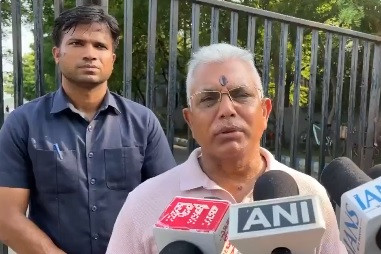
Leaders of the Left also stressed the need for a violence-free electoral environment. State secretary of the CPI(M), Mohammed Salim, said the number of phases was not the primary concern; rather, the focus should be on guaranteeing a free, fair and peaceful voting process.
The ruling All India Trinamool Congress, however, criticized the decision. Party spokesperson Arup Chakraborty alleged that the Commission was acting under the influence of the BJP and claimed that the opposition had long demanded two-phase polling. Despite the criticism, he asserted that regardless of the number of phases, the party led by Chief Minister Mamata Banerjee would return to power for a fourth consecutive term.
The issue of voter list revisions has also emerged as a matter of concern. According to available data, the number of registered voters in West Bengal has declined from approximately 76.6 million in 2025 to around 64.4 million in the latest list, with a large number of names still under adjudication. Election officials are monitoring the situation closely as the final voter rolls will determine who is eligible to participate in the upcoming polls.
The matter is also being closely watched by the judiciary. The Supreme Court of India is scheduled to hear the next phase of the voter list revision case on March 25. Earlier observations by the court indicated that eligible voters could be added to the list until just before polling, though final decisions regarding disputed cases will depend on the legal process.
With nomination deadlines approaching in early April and political campaigning expected to intensify in the coming weeks, the focus now shifts to how effectively the Election Commission and security agencies can ensure a peaceful democratic exercise in one of India’s most politically vibrant states.
You might also like!