‘From 2011’s Change to 2026’s Real Transformation’: Suvendu Adhikari Strikes a Defiant and Development-Focused Tone in Nandigram
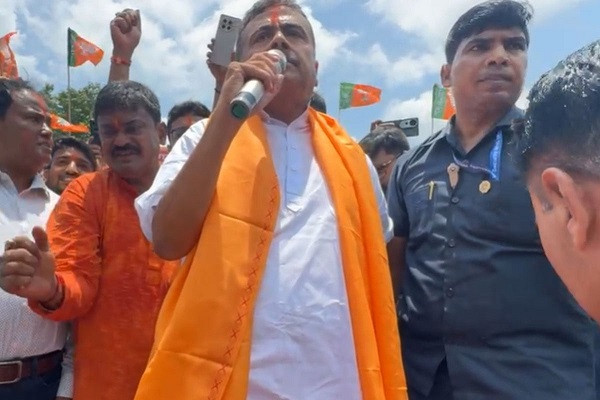
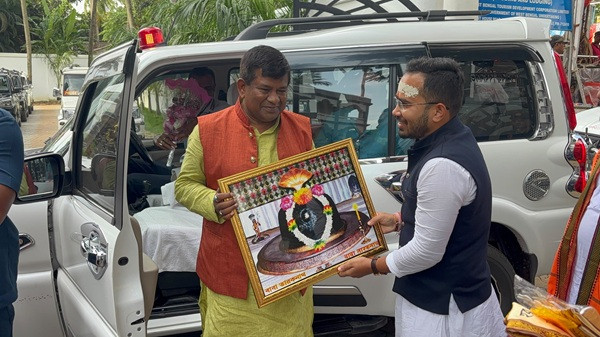
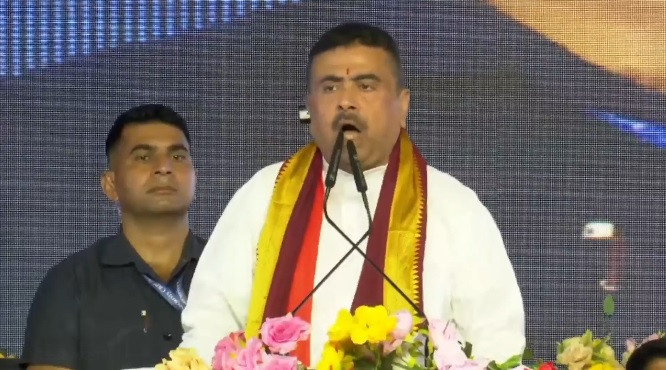
IIE DIGITAL DESK : Nandigram, May 6, 2026: Senior Bharatiya Janata Party leader Suvendu Adhikari on Wednesday returned to politically significant Nandigram with a message that blended symbolism, confidence and a call for restraint. Fresh from his victory in the 2026 West Bengal Assembly elections, Adhikari addressed party workers at the BJP’s Nandigram office and declared, “I was part of the change in 2011; this time I am part of the real change,” drawing loud cheers from supporters gathered at the venue.
The remark was widely seen as a pointed political statement, reflecting both his personal journey and the evolving political landscape of the state. Adhikari had played a key role during the 2011 political transition in West Bengal. His latest statement suggests that he views the 2026 mandate as a more decisive and transformative shift.
Adhikari contested the 2026 Assembly elections from two constituencies and secured victory in both by comfortable margins. As per constitutional norms, he will have to vacate one of the seats within ten days. Addressing questions on which constituency he intends to retain, Adhikari made it clear that the final decision would rest with the BJP’s central leadership. “Whatever my party’s central leaders decide will be final. If I have any opinion to offer, I will convey it to them. I must give up one seat within ten days, but I will not step away from my responsibilities in either constituency,” he said. His remarks underscored party discipline while reassuring voters from both segments of his continued engagement.
Highlighting the BJP’s electoral performance in Purba Medinipur district, Adhikari pointed to what he described as a sweeping endorsement of the party. In the 2024 Lok Sabha elections, BJP candidates were ahead in all 16 Assembly segments of the district. In the 2026 Assembly polls, the party converted that advantage into a clean sweep, winning all 16 seats. Adhikari claimed that the BJP’s vote share in the 2024 parliamentary elections stood at 39 percent in the district, whereas in the 2026 Assembly elections the party secured approximately 46 percent vote share across the state and 56 percent in Purba Medinipur alone.
Projecting confidence about the road ahead, Adhikari said the new government would work vigorously over the next year to expand public trust and support. He asserted that effective governance and visible development would help the party reach an even broader section of voters in future elections. His remarks signaled that the BJP intends not only to consolidate its gains but also to widen its base across West Bengal.
Beyond political messaging, Adhikari outlined a series of development initiatives for Nandigram and adjoining areas. He assured residents that work on several projects would begin soon after the formal formation of the government. Among the key proposals he mentioned was the construction of a bridge connecting Haldia and Nandigram, a project expected to improve connectivity and stimulate regional economic growth. He also announced plans for a modern residential school in Mahishadal to enhance educational infrastructure and an Industrial Training Institute in Sonachura to promote vocational training and employment opportunities for local youth.
Agriculture, a primary livelihood in the region, also featured prominently in his speech. Adhikari said efforts would be made to ensure that farmers in Nandigram-I block could cultivate paddy twice a year, indicating improvements in irrigation and allied support systems. The promise of double-cropping was presented as part of a broader strategy to strengthen rural incomes and agricultural productivity.
Despite the celebratory mood following the electoral victory, Adhikari emphasized the need for peace and discipline. He appealed to party workers to maintain law and order in their respective areas and refrain from targeting opposition party offices. Stressing that electoral success must not lead to confrontation, he called on supporters to act responsibly and uphold democratic values.
He also advised party workers to postpone victory processions for the next few days. According to him, celebrations should take place only after obtaining police permission and preferably after the 9th of the month. For the immediate period, he urged restraint and calm, signaling an intent to project stability and responsible governance.
Adhikari’s address in Nandigram thus combined political assertion, development promises and a call for harmony. His declaration that he was part of the “change” in 2011 but now stands with the “real transformation” in 2026 captured the tone of a leader seeking to frame the current mandate as historic. As the state moves toward the formation of a new government, his remarks from Nandigram are expected to resonate strongly across West Bengal’s political spectrum.
You might also like!