Uttar Pradesh Chief Minister Yogi Adityanath Performs Cow Service at Gorakhnath Temple
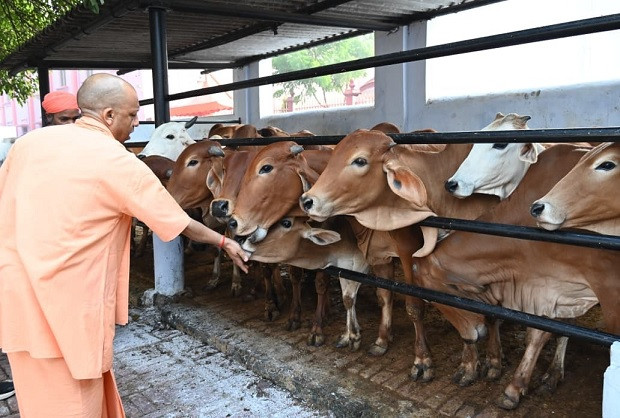
IIE DIGITAL DESK ; Gorakhpur, November 2: Uttar Pradesh Chief Minister Yogi Adityanath spent some peaceful moments performing cow service at the Gorakhnath Temple in Gorakhpur on Monday morning. During his visit to the temple's cowshed, the Chief Minister personally fed the cows with rotis and jaggery. His interaction with the animals attracted attention and highlighted his continued association with the traditional practices and religious activities of the temple.
As part of his customary morning routine, Yogi Adityanath visited the Gorakhnath Temple and offered prayers to Mahayogi Guru Gorakhnath, who is revered as an incarnation of Lord Shiva. The Chief Minister followed the traditional rituals and sought blessings at the temple before proceeding to other important locations within the temple premises.
After completing his prayers, Yogi Adityanath visited the samadhi of Mahant Avaidyanath, his spiritual predecessor and former head of the Gorakhnath Math. At the memorial, the Chief Minister was seen bowing respectfully and offering his prayers. He also sought blessings at the samadhi, maintaining the longstanding spiritual tradition associated with the Gorakhnath Math.
The visit reflected the Chief Minister's connection with the religious and spiritual traditions of the Gorakhnath Temple. As the head of the Gorakhnath Math, Yogi Adityanath has maintained a close association with the institution and its daily religious practices. His morning visit included both the customary worship rituals and time spent at the cowshed.
The temple premises, the Chief Minister also reached the gaushala, where he spent some time among the cows. He personally offered them rotis and jaggery, feeding the animals with his own hands. Cow service, traditionally known as 'Go-Seva', holds religious and cultural significance in Hindu traditions. The practice is regarded as an expression of compassion and care towards animals.
The moments spent at the cowshed provided a glimpse of the Chief Minister's participation in the traditional activities of the temple. His visit to the samadhi of Mahant Avaidyanath and his prayers to Guru Gorakhnath were also part of the customary religious observances.
Gorakhnath Temple remains an important religious and spiritual centre in Uttar Pradesh. The temple is closely associated with the Nath tradition and has a significant place in the religious life of Gorakhpur. Yogi Adityanath's visit on Monday morning once again brought attention to the temple's spiritual traditions and the practice of cow service.
You might also like!