Opinion piece argues Governor must follow constitutional convention and invite Vijay-led TVK for floor test as post-poll alliances and rival manoeuvres intensify in Chennai
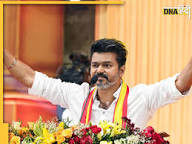
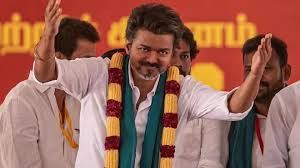
IIE DIGITAL DESK : Opinion column discusses the evolving political situation in Tamil Nadu after the 2026 Assembly election delivered a fractured mandate, with actor-politician Thalapathy Vijay’s Tamilaga Vettri Kazhagam (TVK) emerging as the single largest party but falling short of a clear majority.
The article focuses on the constitutional responsibilities of the Governor and the ongoing political uncertainty surrounding government formation. TVK, led by Vijay, has secured a strong position in the 234-member Assembly but has not independently crossed the majority mark. Despite this, the party has reportedly gained additional support from smaller allies, strengthening its claim to form the government.
The opinion piece argues that under established constitutional conventions, including the Sarkaria and Punchhi Commission guidelines, the Governor is expected to invite the leader of the single largest party to prove majority on the floor of the House. It suggests that Vijay’s claim should be tested in the Assembly rather than being blocked at the Raj Bhavan level.
Tamil Nadu politics has entered a phase of intense speculation, with discussions around possible post-poll realignments involving long-time rivals DMK and AIADMK. These two Dravidian majors, historically opposed to each other, are reportedly exploring fallback or strategic arrangements to counter the rise of TVK, although no formal alliance has been confirmed.
The article also highlights internal political tension and uncertainty, as the absence of a clear majority has opened the door to shifting alliances, negotiations, and competing claims to power. While TVK remains in a strong position as the single largest party, rival blocs are attempting to consolidate numbers in case of a floor test or alternative coalition formation.
The Governor’s decision is seen as crucial in determining the immediate political direction of the state. The opinion stresses that constitutional procedure, rather than political discretion, should guide the next steps, ensuring that the elected Assembly itself decides who commands majority support.
The piece reflects the larger political uncertainty in Tamil Nadu, where traditional Dravidian rivals, a new political force in TVK, and constitutional authorities are all central to a rapidly evolving post-election scenario.
You might also like!