Tedros Meets J.P. Nadda, WHO Chief Praises India’s Progress in Healthcare
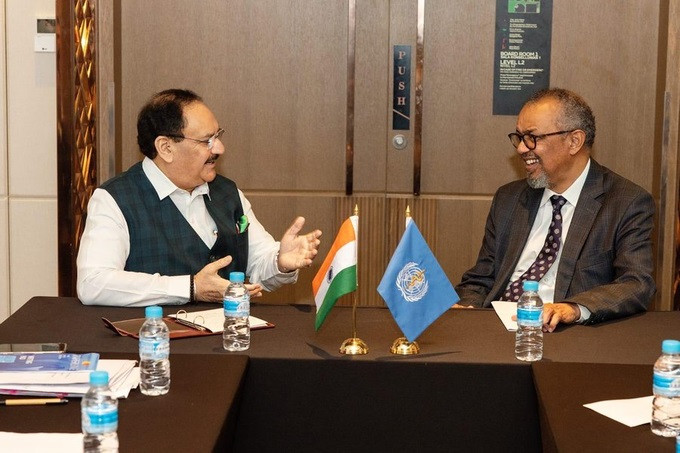
IIE DIGITAL DESK ; New Delhi, September 10: World Health Organization (WHO) Director-General Dr Tedros Adhanom Ghebreyesus met Union Health Minister J.P. Nadda in New Delhi and praised India for its significant progress in the healthcare sector. During the meeting, Dr Tedros congratulated India for its achievements in improving maternal and child health and strengthening the fight against non-communicable diseases.
The meeting focused on India's expanding healthcare infrastructure and the country's efforts to make essential health services more accessible to people, particularly at the grassroots level. Dr Tedros highlighted several initiatives that have helped bring screening, diagnosis and treatment closer to communities across the country.
In a post on social media, the WHO chief specifically referred to India's network of around 1,60,000 Ayushman Arogya Mandirs. He said these health centres are helping bring screening and diagnostic services for common health conditions such as hypertension, diabetes and certain cancers closer to people's homes. The centres also facilitate referrals for patients who require further medical evaluation or specialised treatment.
Dr Tedros also praised the contribution of India's ASHA workers, describing their role in taking healthcare services directly to communities as a unique example. Accredited Social Health Activists have become an important link between healthcare institutions and people, particularly in rural and underserved areas. Their work includes supporting awareness campaigns, maternal and child health services, immunisation drives and other public health initiatives.
According to Dr Tedros, India's progress in healthcare has also been reflected in the expansion of vaccination programmes and the rise in institutional deliveries. He noted that the proportion of institutional deliveries in India has increased from 78 per cent to 93 per cent. The improvement, along with other public health interventions, has contributed to a sustained decline in maternal and child mortality.
The WHO chief's comments underline the growing international recognition of India's efforts to strengthen primary healthcare and improve access to essential medical services. The expansion of community-level healthcare facilities has been particularly important in ensuring that people can receive basic screening and medical support without having to travel long distances to major hospitals.
The discussions between Dr Tedros and J.P. Nadda also covered India's continued efforts towards tuberculosis elimination. TB remains an important public health challenge, and India has been pursuing a range of measures aimed at improving detection, treatment and prevention while reducing the disease burden.
Another issue discussed during the meeting was the strengthening of regulatory systems related to medical products. The two sides also exchanged views on India's cooperation with the WHO on several important global health initiatives.
Traditional medicine was among the areas of cooperation discussed during the interaction. India has been seeking greater global recognition and collaboration in the field of traditional healthcare practices, while also working with international institutions on research, standards and evidence-based approaches.
The discussions also touched upon the ongoing negotiations concerning the “Pathogen Access and Benefit Sharing” mechanism under the WHO Pandemic Agreement. The issue is linked to global preparedness for future pandemics and concerns the sharing of pathogens and the benefits arising from the development of vaccines, diagnostics and other medical countermeasures.
The meeting comes at a time when international cooperation has become increasingly important in addressing global health challenges. Issues such as infectious diseases, non-communicable diseases, pandemic preparedness, access to medicines and strengthening healthcare systems require coordinated action among countries and international organisations.
Dr Tedros's appreciation of India's healthcare achievements is significant as the country continues to expand its primary healthcare network and focus on preventive care. The emphasis on early screening for hypertension, diabetes and cancers reflects a broader shift towards detecting diseases at an earlier stage, when treatment and management can be more effective.
The recognition of ASHA workers also highlights the importance of community-based healthcare in India's public health system. By connecting households with formal healthcare services, these frontline workers play an important role in improving awareness and encouraging people to seek timely medical assistance.
The meeting between Dr Tedros and J.P. Nadda thus covered both India's domestic healthcare achievements and its wider contribution to international health cooperation. From maternal and child health to TB elimination, traditional medicine and pandemic preparedness, the discussions reflected the broadening scope of India's engagement with the WHO.
With healthcare systems across the world facing increasingly complex challenges, India's experience in expanding community-level services and strengthening preventive healthcare is attracting international attention. Dr Tedros's remarks offered recognition of these efforts while highlighting the importance of continued cooperation between India and the WHO in tackling emerging and long-standing global health challenges.
You might also like!