You Cannot Export Wheat and Import Bread: Prime Minister Narendra Modi Urges Industry to Focus on Value Addition
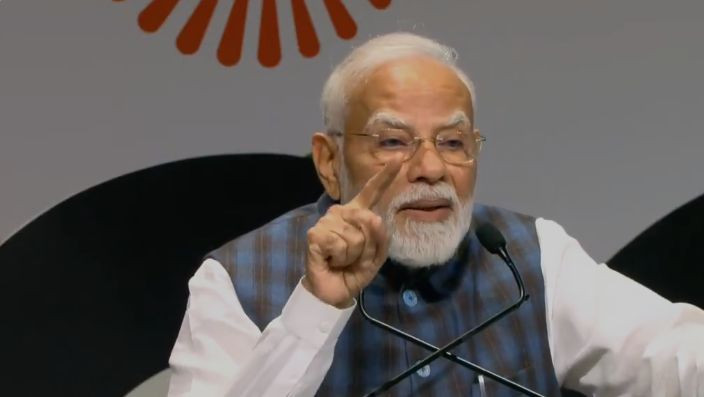
IIE DIGITAL DESK ; New Delhi, November 19: Prime Minister Narendra Modi on Thursday highlighted India's remarkable economic progress as one of the world's fastest-growing major economies while urging the country's industrial sector to undertake serious self-assessment and strengthen domestic manufacturing. Addressing the industry leaders at the centenary annual convention of the Federation of Indian Chambers of Commerce and Industry (FICCI) at Bharat Mandapam in New Delhi, Modi delivered a strong message against the excessive export of raw materials and dependence on imports of finished products.
Emphasising the importance of value addition, the Prime Minister said no country could achieve sustainable economic progress by exporting basic resources and importing finished goods. He called upon Indian industries to strengthen domestic production capabilities, adopt advanced technologies and ensure that more value is created within the country.
Highlighting India's economic performance, Modi said the country had emerged as the fastest-growing major economy in the world and was expected to maintain a growth rate of nearly seven per cent, according to projections by leading organisations.
"India is now the world's fastest-growing major economy. According to forecasts by leading organisations, the country is expected to continue growing at around seven per cent. Another important figure caught everyone's attention in October. India's merchandise exports reached nearly 50 billion dollars, setting an all-time record for monthly merchandise exports," the Prime Minister said.
He further pointed out that India's strong economic performance had encouraged several leading international institutions to revise their growth projections upwards. Organisations such as Moody's, S&P Global Ratings, Fitch Ratings, the World Bank and the Asian Development Bank have expressed greater confidence in India's economic prospects, he noted.
Modi stressed that the country should not become complacent with its achievements. Instead, he urged industry leaders to critically examine their strengths and weaknesses and prepare for the next phase of economic transformation. Referring to the teachings of India's ancient scriptures, he said individuals, industries and nations must continuously strive for improvement by recognising their capabilities, identifying shortcomings and learning from past experiences.
The Prime Minister described honest self-assessment as the starting point of the next major leap in development. Referring to FICCI's 100-year journey, he said the organisation had witnessed several important milestones in the evolution of Indian industry. However, the focus should now shift towards the achievements that the country's industrial sector could accomplish over the next two decades.
He urged business leaders to consider how Indian industries could contribute more effectively towards the vision of Viksit Bharat and the goal of Atmanirbhar Bharat. According to him, the coming years would require greater innovation, technological advancement, investment and a stronger commitment to domestic manufacturing.
One of the key concerns raised by Modi was India's continued dependence on imports of value-added products despite possessing abundant natural resources. Referring to the country's mineral resources, he pointed out that India continues to export iron ore while importing processed steel. Similarly, despite having substantial bauxite reserves, the country still imports specialised aluminium products.
The Prime Minister called upon the industrial sector to address these structural weaknesses by developing stronger domestic manufacturing facilities and improving processing capabilities. He stressed that Indian industries must move beyond the export of raw materials and focus on producing high-value finished goods.
Delivering a strong message on the issue, Modi said, "India still exports iron but imports processed steel. Despite having vast reserves of bauxite, we import specialised aluminium products. The industrial sector must strengthen domestic manufacturing, develop advanced technologies and ensure greater value addition across mineral supply chains. No country can continue exporting wheat and importing bread."
His remarks highlighted the need to transform India's resource-based economy into a manufacturing-driven economic powerhouse. Greater investment in processing industries, technological research and domestic supply chains, he indicated, would help the country reduce import dependence and create more employment opportunities.
The Prime Minister also highlighted the untapped potential of India's agricultural sector and called for greater corporate participation and investment in agriculture. Despite having enormous agricultural resources and a diverse production base, India's share in global agricultural exports remains relatively small.
"Despite having enormous agricultural potential, India's share in global agricultural exports is only around 2 to 2.5 per cent. Our corporate sector still hesitates to invest in agriculture. We must all work together to change this situation," Modi said.
He emphasised that increased corporate investment could help modernise agricultural infrastructure, improve food processing facilities, strengthen supply chains and expand India's presence in international markets. Greater private-sector participation could also help farmers access better technology, storage facilities and wider market opportunities.
The Prime Minister's address at FICCI's centenary convention therefore carried a broader message for India's business community. While acknowledging the country's economic achievements and growing international confidence, he made it clear that future progress would depend on the ability to create greater domestic value, strengthen manufacturing and unlock the potential of agriculture.
The vision of Viksit Bharat and Atmanirbhar Bharat guiding the country's development agenda, Modi urged Indian industries to look beyond conventional business models and prepare for a more competitive global economy. His central message was clear: India's economic strength must not remain limited to exporting raw resources; the country must increasingly manufacture, process and export high-value products of its own.
You might also like!