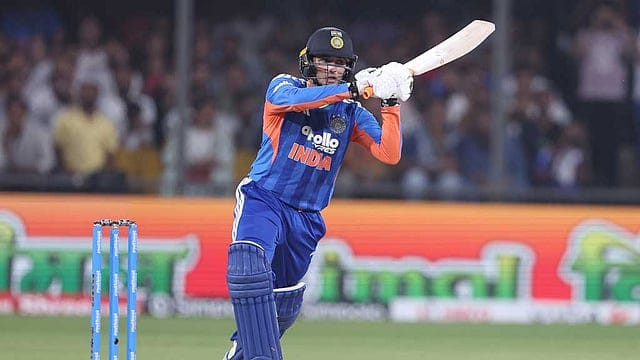
Indian Women’s Cricket Team: Smriti Mandhana’s Brigade Complete ODI Series Whitewash Against Zimbabwe with an Eight-Wicket Victory in the Third Match

IIE DIGITAL DESK : The Indian women’s cricket team continued its impressive run under new captain Smriti Mandhana, completing a clean sweep against Zimbabwe in the three-match One Day International series after previously dominating the T20I series at home. India defeated Zimbabwe by eight wickets in the third and final ODI at the stadium in Vadodara on Wednesday, underlining their superiority with another commanding performance in both bowling and batting.
After winning the toss and opting to bat first, Zimbabwe struggled against India’s disciplined bowling attack and were bowled out for just 131 in 39.5 overs. Left-arm spinner Vaishnavi Sharma emerged as the standout performer with the ball, claiming five wickets for 39 runs in her 10-over spell. Kranti Gaud and Sayali Satghare also made important contributions, picking up two wickets apiece. Their combined efforts prevented Zimbabwe from building meaningful partnerships or posting a challenging total.
In reply, India made light work of the 132-run target, reaching it in just 17 overs with eight wickets in hand. Pratika Rawal and Shafali Verma led the chase with unbeaten half-centuries, combining attacking stroke play with composure to ensure that Zimbabwe’s bowlers had little opportunity to make a comeback. The emphatic victory completed India’s 3-0 ODI series sweep and further strengthened the team’s growing confidence under Mandhana’s leadership.
Zimbabwe’s innings never really gathered momentum as India’s bowlers maintained pressure from one end to the other. Vaishnavi Sharma was particularly effective, using her left-arm spin to trouble the opposition batters and deliver a match-defining performance. Her five-wicket haul proved crucial in restricting Zimbabwe to a modest total, while Kranti Gaud and Sayali Satghare provided valuable support with two wickets each. The Indian attack continued to take wickets at regular intervals, ensuring that the visitors could not settle into a rhythm.
Modester Mupachikwa was Zimbabwe’s highest scorer with 37 runs, while captain Josephine Nkomo contributed 35. However, the rest of the batting line-up failed to provide substantial support. Seven Zimbabwean batters could not reach double figures, reflecting the difficulties they faced against India’s disciplined bowling. With wickets falling regularly, Zimbabwe were unable to build a substantial total and were dismissed before completing 40 overs.
The target of 132 was never likely to pose a serious challenge for an Indian side in such strong form. Pratika Rawal and Shafali Verma came out with positive intent and attacked the Zimbabwean bowlers from the beginning. Both batters remained unbeaten after scoring half-centuries, ensuring that India completed the chase comfortably without allowing the opposition to create any real pressure.
Their partnership was central to the convincing result, with the pair maintaining a healthy scoring rate throughout the innings. India lost just two wickets before reaching the target in 17 overs, sealing an eight-wicket win in the third ODI. The swift chase highlighted the depth and confidence of the Indian batting line-up, which backed up an outstanding bowling display with an equally dominant performance with the bat.
The result was another clear indication of India’s all-round superiority throughout the series. India had won the first ODI by nine wickets before registering a comprehensive 121-run victory in the second match. The third match followed the same pattern, with the bowlers restricting Zimbabwe to a low score and the batters finishing the job with ease. By winning all three ODIs, India completed a clean sweep and left the visitors without a victory in the series.
The team’s success also followed a dominant performance in the T20I series against Zimbabwe. Under Smriti Mandhana’s captaincy, India won all three T20I matches before repeating the achievement in the ODI format. The consecutive series victories have highlighted the team’s strength across formats, with several players stepping up at crucial moments. Vaishnavi Sharma’s five-wicket haul and the unbeaten half-centuries from Pratika Rawal and Shafali Verma were the major highlights of the final ODI.
The series also carried significance for India in the ICC Women’s Championship 2025-29 cycle. The three-match contest against Zimbabwe was India’s first ODI series in the championship, and the team collected all six available points by winning every match. India currently occupy seventh position in the standings with those six points. Since every match contributes valuable points towards the competition, the clean sweep provides an encouraging start to the campaign.
India will now look to maintain this momentum in their upcoming international assignments. The team’s next ODI series is scheduled to take place during the tour of South Africa in December 2026. The tour is expected to feature three ODIs, along with a Test match and a three-match T20I series, giving the Indian side an important opportunity to test itself in overseas conditions.
After completing a dominant home campaign against Zimbabwe, India will aim to carry the same consistency into the South African tour. The challenge will be to maintain their strong bowling performances, build reliable batting partnerships and adapt to different playing conditions. For Mandhana and her team, the comprehensive series whitewash offers a positive foundation as they prepare for a demanding international schedule ahead.
You might also like!