“One Phone Call from PM Modi Could End Middle East Clash, Says Former UAE Envoy”
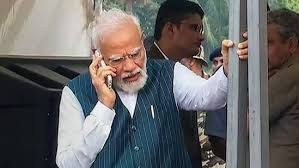
IIE DIGITAL DESK : Tensions in the Middle East show no sign of easing as the conflict involving Iran, Israel and the United States intensifies, affecting regional stability and global economic systems. In this volatile scenario, a striking diplomatic assertion has come from Hussain Hassan Mirza, the first ambassador of the United Arab Emirates (UAE) to India, who has suggested that a single phone call from Indian Prime Minister Narendra Modi could help end the conflict.
Mirza, speaking in an interview with Indian television, stressed India’s unique diplomatic position in West Asia, noting that Prime Minister Narendra Modi commands respect not only among political leadership but also within business and public communities across the Gulf region. According to him, this credibility extends to the nations currently at odds in the conflict — including Iran and Israel — and could therefore be leveraged to encourage dialogue between them. “One phone call from Mr Modi to the counterparts in Iran and Israel can solve this issue, can end this issue,” Mirza told reporters, emphasising that Modi’s personal rapport with both sides gives New Delhi rare influence in the ongoing crisis.
The former UAE envoy highlighted that the UAE has no desire to be drawn into the current hostilities and has made its position clear that its territory should not be used as a staging ground for military operations by any side in the conflict. He argued that the geographical and diplomatic position of Abu Dhabi — located proximate to Iran yet partnered with Israel under agreements such as the Abraham Accords — positions the UAE as a potential facilitator of peace, though it prefers a neutral role rather than direct involvement in the fighting.
Mirza’s comments come amid escalating violence in West Asia, where military engagements and retaliatory strikes have continued without significant signs of de‑escalation. The hostilities have triggered international concern over potential spill‑over effects on global energy supplies, maritime trade routes such as the Strait of Hormuz, and the safety of millions of expatriate workers from India and other nations living in the Gulf region.
India itself has been actively engaged in diplomacy to mitigate the impact of the conflict. Prime Minister Modi and senior Indian officials have held discussions with leaders from several Gulf states, including Qatar, Oman and Kuwait, condemning attacks on neighbouring countries and advocating for calm and restraint. India’s external affairs ministry has reiterated the need for dialogue and a peaceful resolution, while also expressing concern about the anxiety caused by developments in the Gulf given India’s extensive trade, energy and diaspora ties in the region.
Experts note that India’s diplomatic approach is inherently complex, requiring careful balancing of its historical relationships with Iran, strategic partnerships with Israel, and strong ties with Arab nations. In this context, Mirza’s assertion underscores an optimistic view of Modi’s global standing and the role India could play in fostering peace, although the practical impact of such a phone call remains speculative amid the deep‑rooted geopolitical tensions.
As the conflict continues to unfold, voices calling for dialogue and diplomatic intervention are growing louder, reflecting widespread international concerns about the humanitarian and economic consequences of prolonged hostilities. In this landscape, suggestions like Mirza’s highlight the increasing calls for influential global leaders to step forward in pursuit of de‑escalation.
You might also like!