A New Era Underground: Kolkata’s East-West Metro Gets Green Signal for Driverless Operations
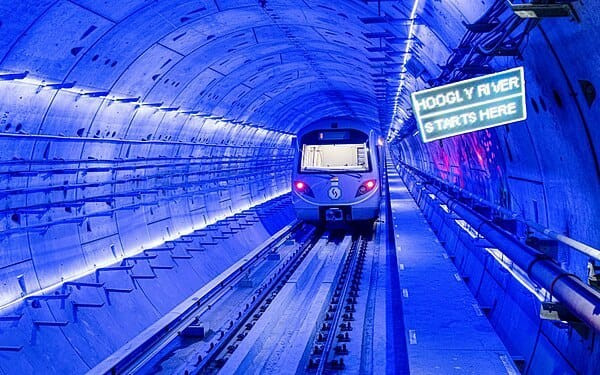
Kolkata: New era of urban transport is about to start as the East-West Metro corridor, with safety approval granted to driverless trains. The line will connect Kolkata and the rest of India via road network. By allowing autonomous metro services on India's first underwater metro route, the city' public transport network now has a new level of technological convenience.
National fame is already owed to the Green Line, which runs under the Hooghly River and is known for its tunnel. Now, with the latest approval from The Commissioner of Railway Safety (CRS), the corridor will be one of Britain's most advanced metro systems, bringing automation to everyday life.
The CBTC system, which is a modern signalling technology, is the driving force behind the driverless operation, allowing trains to operate with high accuracy. The Central Park depot's Operations Control Centre will monitor train movements around the clock. This facility is situated in Salt Lake. The modernized system aims to facilitate efficient operations, enhance efficiency, and ensure the safety of travelers. The operator is present to reassure passengers and oversee operations while commuters adjust to the new system. Automated controls will maintain the trains functionality.
The driverless system underwent several successful trials to assess its performance and safety, ultimately leading to the approval. The Metro was examined by officials to evaluate various operational aspects, including signalling, braking, communication systems, and emergency response capabilities. The outcomes of the tests indicated that this suggests the corridor is secure enough for autonomous vehicles to operate.
The introduction of driverless vehicles is expected to have positive impacts on Kolkata's metro system. Automated services can enhance punctuality, decrease human error, and increase train availability. Moreover, the system is projected to enhance energy efficiency and real-time monitoring, leading to a more trustworthy travel experience for passengers.
Shorter waiting times, smoother travel times and improved reliability could be the benefits for thousands of daily commuters. Automation is poised to take over the transportation sector in a significant manner as part of the city's expansion of its metro infrastructure. Kolkata, which launched India' first metro railway service in 1984, is now renowned for its innovation and progress. As part of the city's ongoing modernisation initiatives, international standards are being implemented and driverless trains are set to launch on the East-West Metro corridor, where underwater vehicles can be ferried.
But the move is more than just a technological upgrade - it's an important step in shaping the future of urban mobility in India. The city of Kolkata is poised to become a pioneer in smart and sustainable public transportation by offering an underwater metro that merges engineering expertise with advanced automation.
You might also like!